
+91 9929584648
nidhikuiyakabra1982@gmail.com
Home/ Hystero-Laparoscopy
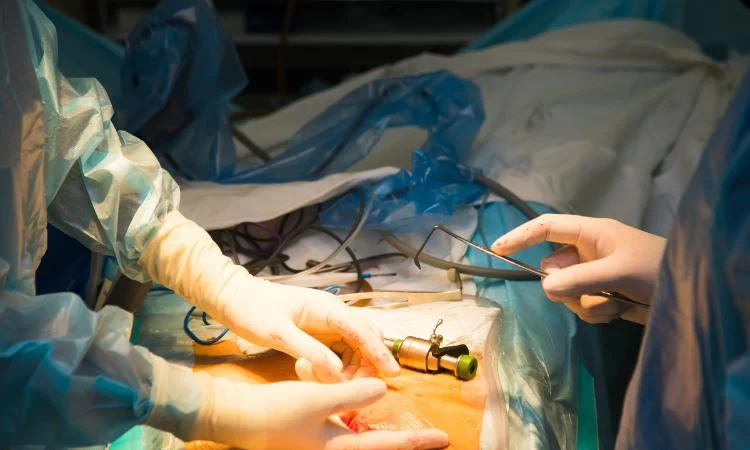
Hystero-laparoscopy is an invasive gynaecological procedure that combines hysteroscopy and laparoscopy. It lets doctors look inside the uterus and the pelvic organs. It helps doctors spot conditions that can affect health, fertility and reproductive health.
Hystero-laparoscopy may be recommended for women who have infertility, repeated pregnancy loss, abnormal uterine bleeding, suspected uterine abnormalities or other gynaecological concerns.
Hysteroscopy lets the doctor examine the inside of the uterus through the cervix. Laparoscopy uses a camera that is inserted through a tiny abdominal incision to view the pelvic organs.
Dr. Nidhi Kabra, a Gynecologist and Fertility Specialist in Jaipur offers consultation and guidance for women who may need hystero-laparoscopy as part of their evaluation. If you are looking for a Gynecologist in Vaishali Nagar, Jaipur you can consult Dr. Nidhi Kabra to learn about the procedure and the treatment options that are available.
Women who are searching for a Gynae Doctor in Vaishali Nagar Jaipur can also consult Dr. Nidhi Kabra for personal guidance, about their reproductive and gynaecological health.
I have seen how hystero-laparoscopy works. Hystero-laparoscopy is a method that combines diagnosis and surgery. This hystero-laparoscopy method uses two methods: hysteroscopy and laparoscopy.
Hysteroscopy: A thin instrument that has a camera is pushed through the vagina and cervix to look inside the cavity. It can also help find or treat some problems inside the uterus.
Laparoscopy: A small camera is put through a cut in the belly to look at the uterus, ovaries, fallopian tubes and nearby pelvic parts. Some problems can also be fixed while it is done.
Using both techniques can help doctors evaluate different parts of the reproductive system during the same surgical session when medically appropriate.
A Gynae Doctor in Jaipur might suggest hystero-laparoscopy when a closer look, at the uterus and pelvic organs is needed to spot and examine gynaecological conditions.
Common reasons include:1. Infertility Evaluation : The procedure may help identify uterine abnormalities, pelvic adhesions, endometriosis or fallopian tube-related concerns that may affect fertility.
2. Recurrent Pregnancy Loss : In selected cases, hystero-laparoscopy may help evaluate structural abnormalities of the uterus or other pelvic conditions associated with repeated pregnancy loss.
3. Abnormal Uterine Bleeding : Hysteroscopy may help examine the uterine cavity and identify possible causes of abnormal bleeding, such as polyps or submucosal fibroids.
4. Uterine Abnormalities : The procedure may help evaluate certain structural conditions, including uterine septum and other abnormalities that may affect reproductive health.
5. Endometriosis and Pelvic Adhesions : Laparoscopy allows direct examination of the pelvic organs and may help identify endometriosis, scar tissue or adhesions.
6. Fallopian Tube Problems : Laparoscopy may help assess the fallopian tubes and surrounding structures. A dye test may sometimes be performed to evaluate tubal patency.
Depending on the patient's condition, hystero-laparoscopy may help diagnose or manage:
Not every condition requires both procedures. The doctor determines the appropriate approach after reviewing the patient's medical history and investigation reports.
Hystero-laparoscopy is generally performed in a hospital or surgical setting under anaesthesia. The exact steps depend on whether the procedure is being performed for diagnosis, treatment or both.
The doctor reviews the patient's medical history, symptoms, previous investigations and reproductive goals. Blood tests, ultrasound or other assessments may be recommended.
A thin camera is gently passed through the vagina and cervix into the uterus. This allows the doctor to examine the uterine cavity and identify abnormalities.
Small incisions are made in the abdomen to insert a camera and, when required, surgical instruments. The doctor examines the pelvic organs and may perform suitable treatment.
After the procedure, the patient is monitored during recovery. The duration of hospital stay and recovery depends on the procedures performed and individual health factors.
When medically indicated, combining hysteroscopy and laparoscopy may offer several advantages:
The benefits and risks vary depending on the patient's condition and the procedures performed.
Like other surgical procedures, hystero-laparoscopy carries some risks. These may include:
Your doctor will explain the potential risks, expected benefits and available alternatives before the procedure.
Hystero-laparoscopy needs a look at a woman's reproductive health, her medical history and what treatments she might need. It is important to understand why the procedure is needed and to talk about options with a gynaecologist before deciding on treatment.
Dr. Nidhi Kabra, a gynecologist and fertility specialist in Jaipur offers consultation for women who have fertility concerns, menstrual problems and other gynecological conditions.
Women looking for the gynecologist in Vaishali Nagar Jaipur can consult Dr. Nidhi Kabra for a personal evaluation and advice, about hystero-laparoscopy and other good treatment options.

MBBS, DGO, FRM
Find answers to some of the most common questions. We are here to help you with the information you need.
Hystero-laparoscopy is a combined procedure that uses hysteroscopy to examine the inside of the uterus and laparoscopy to examine the pelvic organs through small abdominal incisions. A Gynae Doctor in Jaipur may recommend this procedure when a detailed evaluation of a woman's reproductive health is required.
It may help identify certain uterine abnormalities, endometriosis, pelvic adhesions and fallopian tube-related problems that can contribute to infertility.
It is a minimally invasive surgical approach, but it still involves anaesthesia and surgical risks. The complexity depends on the procedures performed and the patient's condition.
Recovery varies according to the type of procedure performed and individual health. Your doctor will provide specific instructions about rest, activity and follow-up.
In selected cases, it may help identify certain uterine or pelvic abnormalities that could be associated with recurrent pregnancy loss. Further treatment depends on the findings.
Can't find the answer you're looking for? Our team is always ready to assist you. Get in touch with us today.
Contact Us